Shopify Developer · Chattanooga, TN

A Shopify developer in Chattanooga who builds what the app store can’t.

Most stores never need more than a good theme and a handful of apps. But every so often a store hits the wall — the workflow that’s specific to your business, the system that won’t talk to Shopify, the task you do by hand every single morning. That’s the gap a Shopify developer fills. I’m Sean Hoagland, I run Hoagland Software Solutions here in Chattanooga, and I build the custom Shopify tools and integrations that the theme and the app store can’t.

This page is about what’s actually possible — the kinds of problems custom Shopify development solves, and where it’s worth the money. No pitch. Even if you never call me, you’ll leave knowing how to spend well.

What a Shopify developer actually does

There’s a difference between a Shopify designer and a Shopify developer, and mixing them up is how people overpay. A designer makes your store look right — theme, fonts, colors, product layout, the feel of your brand. A developer writes code to make the store dosomething the theme and the app store can’t handle on their own.

A good Shopify developer in Chattanooga isn’t there to rebuild your whole store on a whim. The work is almost always a specific, repeated pain point that a custom tool removes for good. It’s not “make it better” — it’s “build the one thing that’s costing me an hour a day.” The clearer that one thing is, the cheaper and faster it gets built.

The reason this matters is that Shopify, out of the box, is built for the average store — and your store isn’t average. The platform deliberately hides its sharp edges so anyone can launch a shop, which is great until your business does something the template never anticipated. A developer works underneath that surface: in real Liquid, in Shopify’s Admin and Storefront APIs, in the metafields and metaobjects that let your content model match your actual catalog. That’s the layer where a store stops fighting you and starts fitting the way you really run — and it’s exactly the layer a drag-and-drop app can’t reach.
What’s possible

What custom Shopify development unlocks

These are the builds Chattanooga store owners hire a developer for — each one a concrete thing the theme and the app store can’t do on their own.

Connect Shopify to the systems you already run

Sync orders, customers, or inventory between Shopify and your CRM, accounting tool, spreadsheet, or fulfillment process using the Admin API — so you stop being the integration layer between two apps that don't talk.

Custom product configurators

Monogramming, embroidery, custom sizing, build-your-own bundles — variant flows that mirror how you actually quote and sell, instead of forcing your catalog into a theme's default product page.

One-click reorders and draft orders

Send repeat customers a pre-filled checkout link or a draft order they can pay in a single tap, instead of making them re-add everything to a cart every time.

Automate the daily manual task

The export-and-reconcile chore, the morning order copy-paste, the report you rebuild by hand every week — moved into code that just runs.

Checkout and Shopify Plus work

Checkout extensions, cart and upsell logic, and the deeper customizations standard Shopify won't allow — scoped to what your plan actually supports.

Fix and speed up an existing store

Strip stacked apps that aren't earning their keep, move logic into the theme, and get Core Web Vitals back in the green — usually for less than a full rebuild.

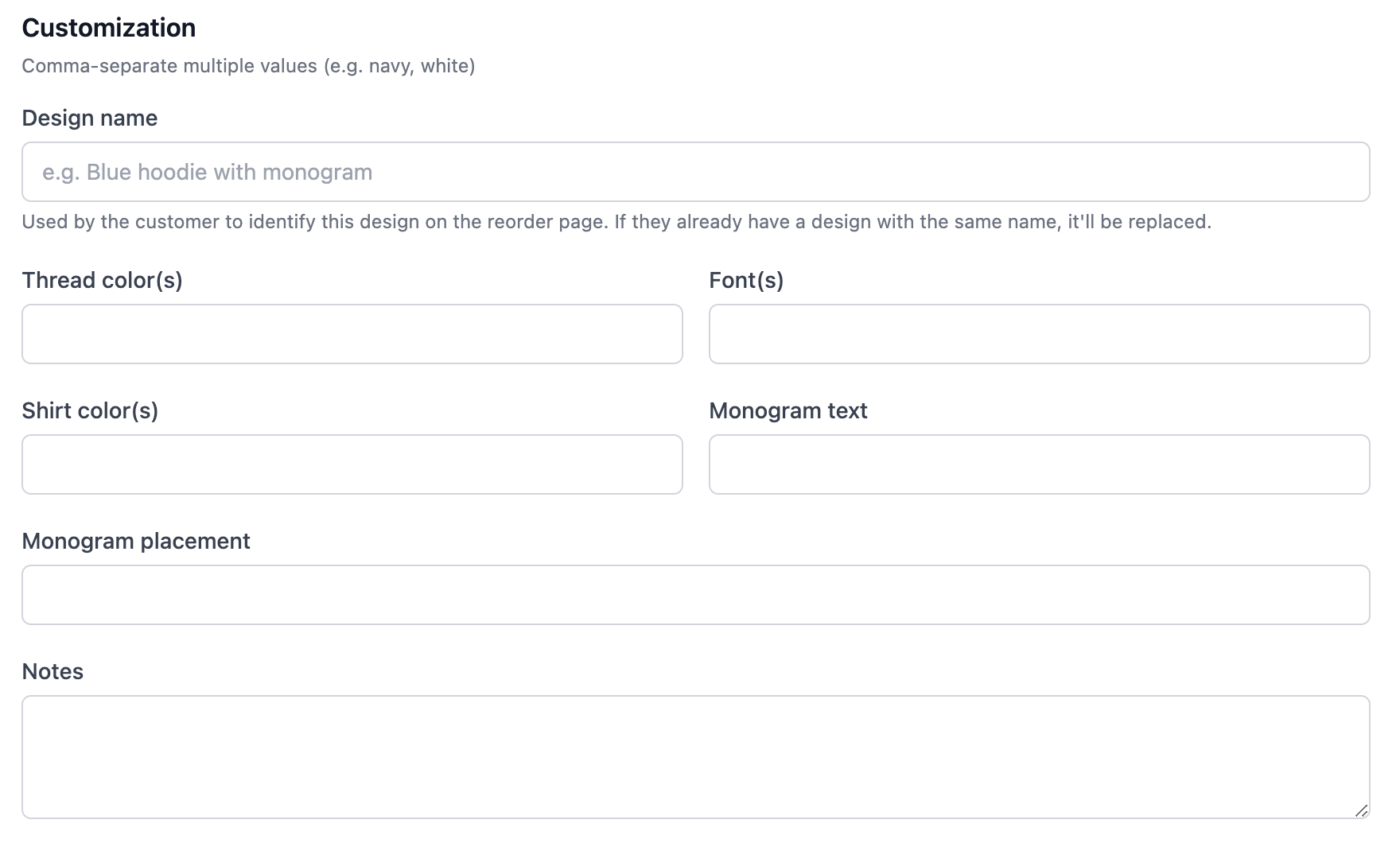
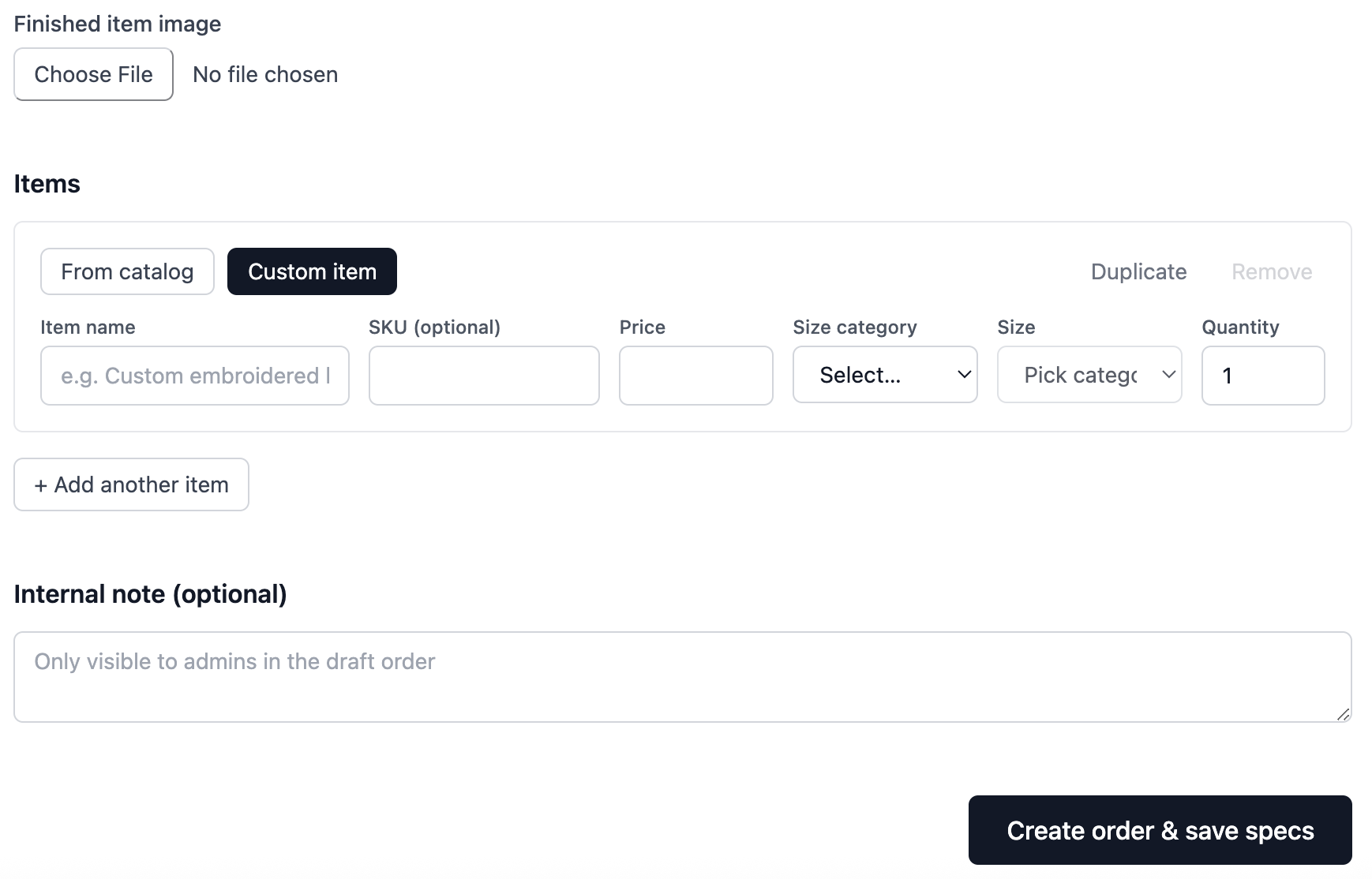
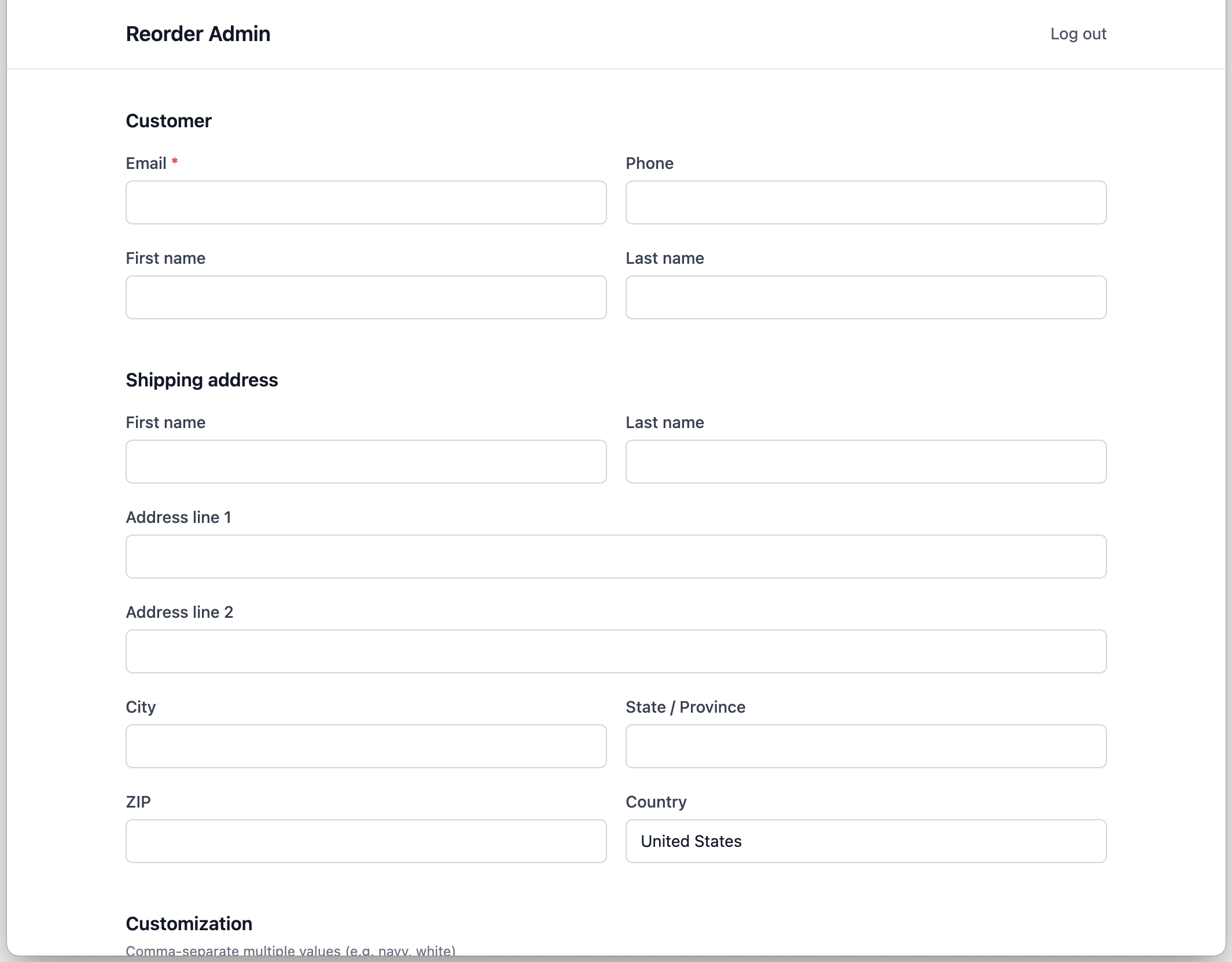
The custom embroidery product flow.
The custom embroidery store admin.
The custom embroidery Shopify storefront.
A real custom build

What this looks like in practice

A one-person embroidery shop in town had great product and zero patience for software. Orders lived in a notebook, quotes happened over text, and the off-the-shelf Shopify product page didn’t fit how she actually sold — a photo, a count, a deadline. I replaced the default configurator with a custom variant flow built around the way she quotes, and set up the rest of her stack so the admin work stopped eating her evenings.

That’s the shape of most custom Shopify work for a small business — not a giant rebuild, just the one specific tool that turns a daily chore into a 30-second task. Reorder flows, configurators, and integrations all follow the same pattern: find the repeated pain, build the thing that removes it.

Read the full case study

When to hire a developer — and when not to

The honest answer is that a lot of stores don’t need custom code at all. The Shopify App Store has already solved email marketing, basic subscriptions, simple upsells, reviews, and loyalty points. If a $30-a-month app does 90% of what you want, that app wins until its monthly fee starts buying you less than a build would. Most stores never hit that line.

You cross into custom Shopify development when no app does the specific thing, when the apps do it badly, when the work has to connect Shopify to another system you run, or when you’re paying for the same manual task with your own time every day. A clean, well-defined feature is cheaper than a vague request — the more precisely you can describe the exact pain, the tighter the quote, and the faster a developer can build it.

That tradeoff — app versus custom, designer versus developer, local versus out-of-state agency — is worth understanding before you spend a dollar. I wrote a longer, no-spin guide to hiring a Shopify developer in Chattanooga, including real cost ranges, over on the full hiring guide.

Shopify developer FAQ

What does a Shopify developer in Chattanooga actually build?

Custom work the theme and the app store can't do on their own — Admin-API integrations, custom product configurators, order and inventory sync with other systems you run, and automations that kill a daily manual task. If your problem is 'it looks dated,' you want a designer; if it's 'I'm retyping orders every morning,' you want a developer.

How much does custom Shopify development cost?

A single, well-defined feature usually runs $800 to $4,000. A deeper integration between Shopify and another system runs $2,500 to $8,000. Larger multi-feature or Shopify Plus builds start around $8,000. I quote a fixed price up front on well-defined projects, so you're not watching an hourly clock.

Do I actually need a developer, or will a Shopify app do it?

If an existing app does about 90% of what you want, use the app — it's cheaper and maintained for you. Hire a developer when no app fits, the apps do it badly, or you need Shopify connected to another system. I'll tell you honestly which side of that line you're on.

Is hiring a local Chattanooga Shopify developer better than a remote agency?

For one well-defined build, a local developer you can talk to directly is usually faster and cheaper than an agency with account managers in the middle. For a six-figure, team-scale store rebuild, an agency structure can earn its cost. Most local stores need the former.

Do I own the code when a custom Shopify build is finished?

Yes. Theme and app code live in a repository you have access to, and you keep full admin ownership of your store. No proprietary lock-in beyond Shopify itself — if you ever bring in another developer, they can read and continue the work.

Got one specific thing to build? Let’s scope it.

Tell me the task that’s eating your time and I’ll tell you straight whether it needs custom Shopify development or whether an app would do it cheaper — with a fixed price, not an hourly meter.

See Shopify development